




Join the Valuation Partner Program today!
Join Today


Express helps business coaches and exit planners move beyond rough estimates and custom spreadsheets with professional-grade valuation reports that support coaching, exit planning, and advisory conversations.

Install the valuation widget once and let it capture leads, qualify prospects, and generate report revenue 24/7.
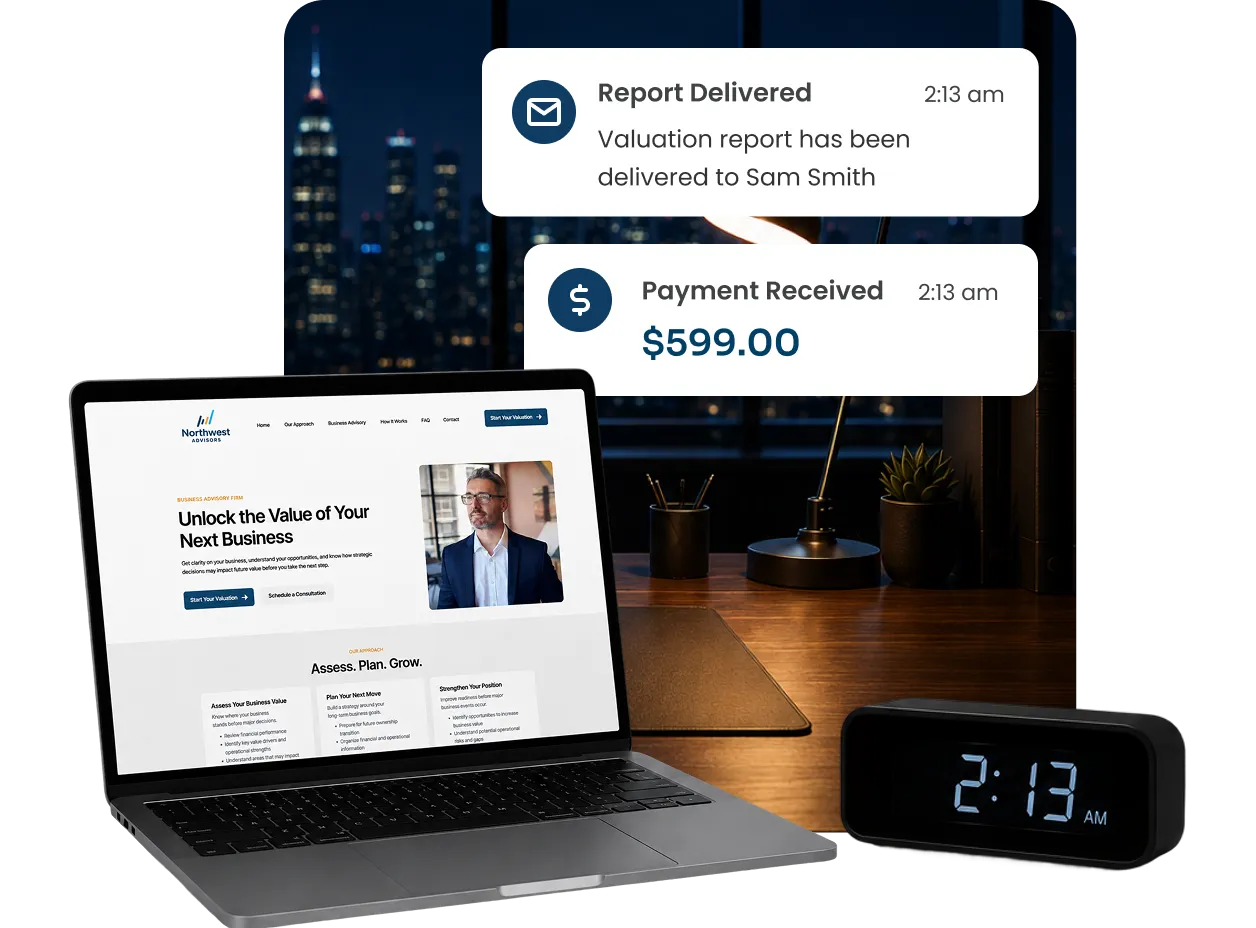
Business owners can request a free valuation summary anytime—even when you're meeting clients, having dinner, or on vacation.
Clients can purchase valuation reports directly through your website. Revenue is earned whether you're online or not.
Every valuation request becomes a qualified prospect you can nurture into larger advisory, brokerage, tax, lending, or consulting engagements.
Manage valuation requests, collect seller financials, track active opportunities, and deliver professional-grade valuation reports from one centralized workspace built for coaches and exit planners.
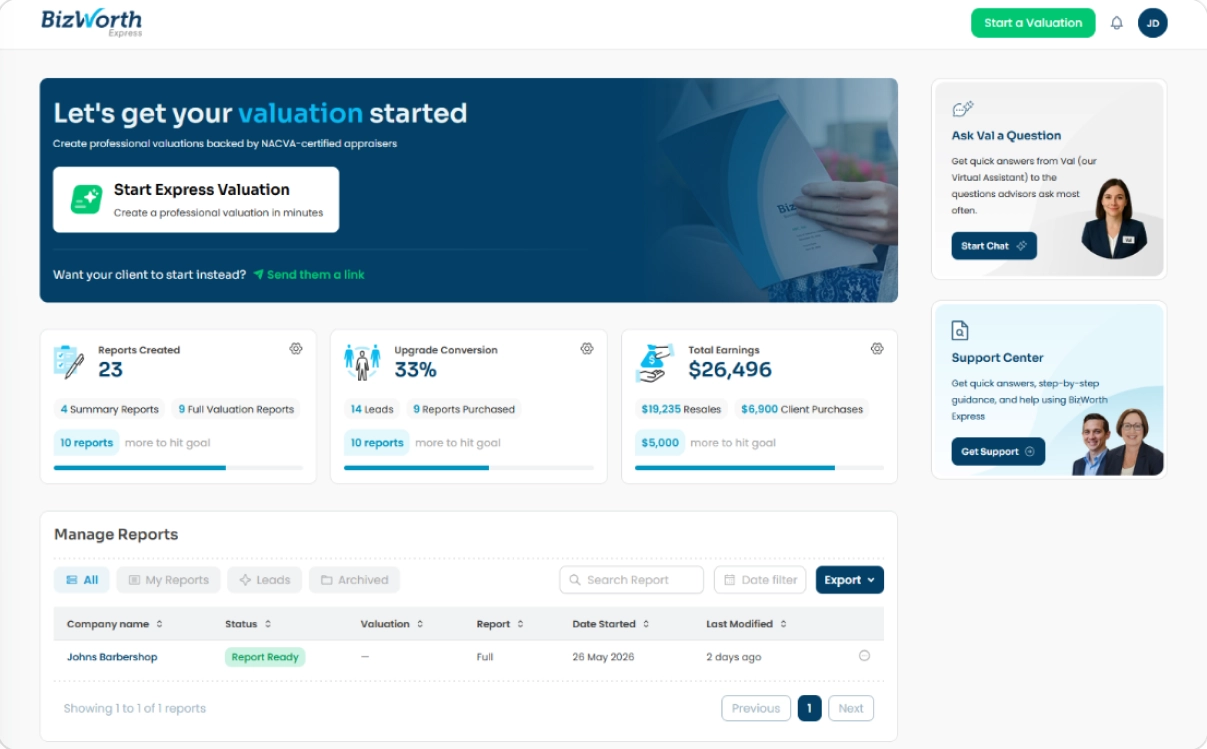
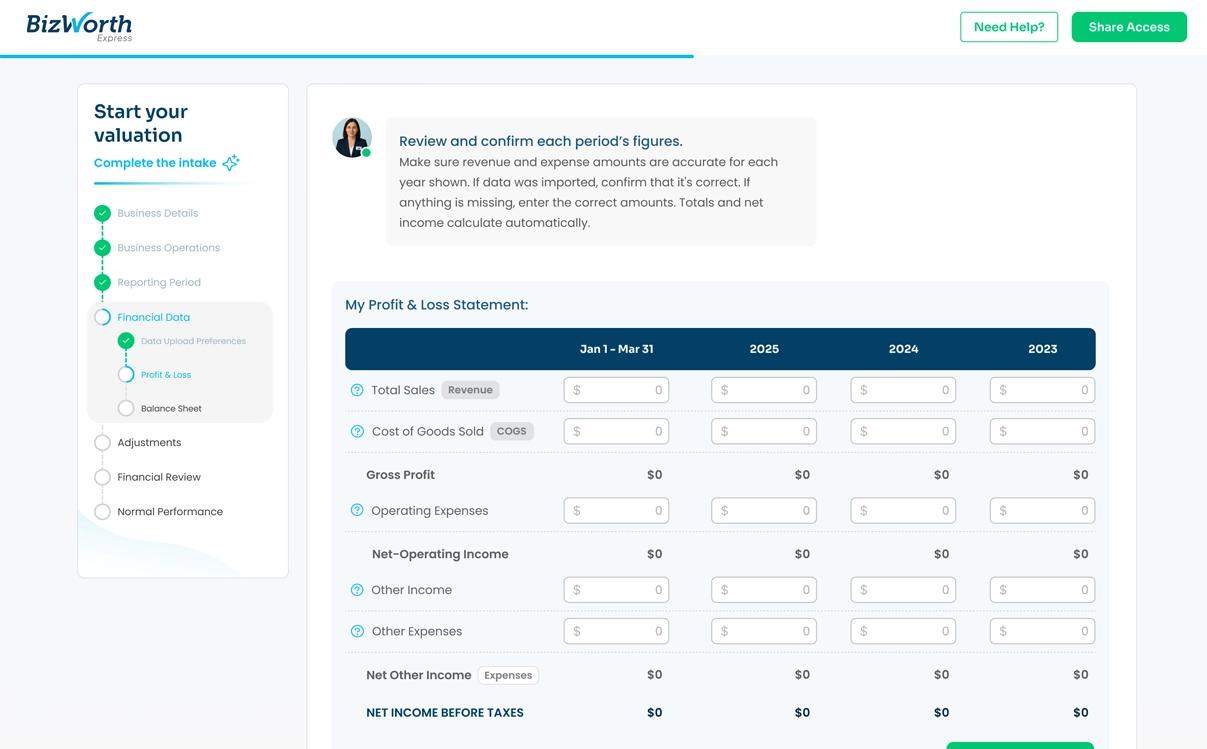
Quickly collect financial information through a guided intake process with QuickBooks integration and tax return uploads, helping move listing and buyer conversations forward faster.
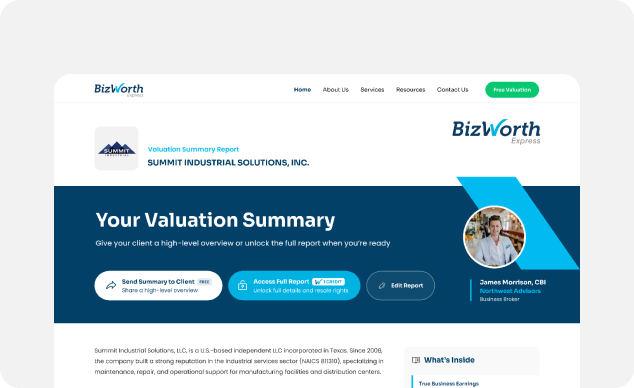
Deliver professional-grade valuation reports in minutes under your brand. Reports help support coaching engagements, growth strategy, exit planning, and advisory conversations without requiring you to build complex valuation models manually.
If a more formally supported valuation is needed, you can seamlessly upgrade to a professional appraisal prepared by NACVA-Certified Appraisers from BizWorth at a discounted rate.

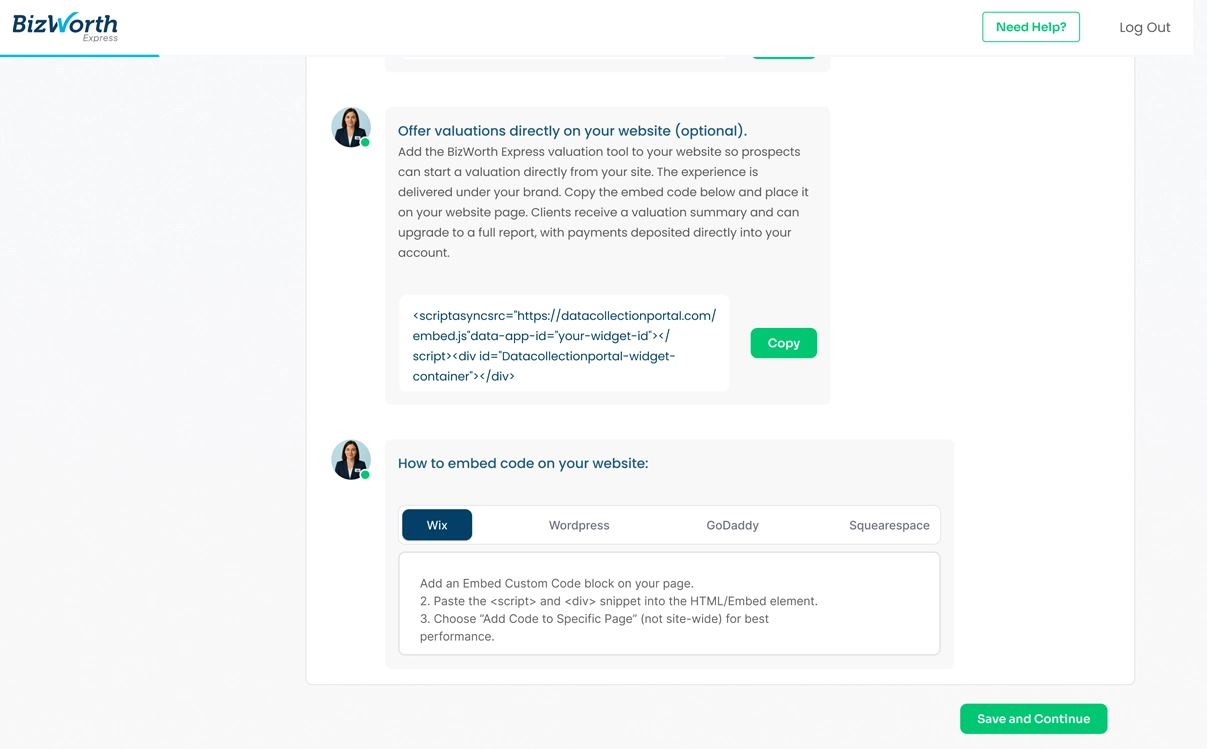
Send prospects to a branded valuation page or embed valuation intake directly into your website. Turn valuation conversations into qualified coaching and advisory opportunities under your brand.
Create a scalable advisory revenue stream by packaging valuation services into coaching and exit planning engagements. Payments are securely deposited directly into your bank account through Stripe without needing to invoice clients manually.
Manage valuation requests, collect financial information, track active coaching engagements, and deliver professional-grade valuation reports from one centralized workspace built for business coaches and exit planners.
Collect financial information through a guided intake process with QuickBooks integration and tax return uploads to support coaching engagements, growth planning, and exit readiness discussions.
Deliver professional-grade valuation reports in minutes under your brand. Reports help support coaching engagements, growth strategy, exit planning, and advisory conversations without requiring you to build complex valuation models manually.
If a more formally supported valuation is needed, you can seamlessly upgrade to a professional appraisal prepared by NACVA-Certified Appraisers from BizWorth at a discounted rate.
Send prospects to a branded valuation page or embed valuation intake directly into your website. Turn valuation conversations into qualified coaching and advisory opportunities under your brand.
Create a scalable advisory revenue stream by packaging valuation services into coaching and exit planning engagements. Payments are securely deposited directly into your bank account through Stripe without needing to invoice clients manually.






BizWorth Express helps business coaches & exit planners respond immediately to valuation inquiries with branded reports built on the same professional valuation methodlogy used in BizWorth's appraisal practice and supported by NACVA-certified appraisers.























 enue
Stream
Turn Valuation
Conversations
Into a
Re
enue
Stream
enue
Stream
Turn Valuation
Conversations
Into a
Re
enue
Stream
The platform’s plans are built around valuation report credits. Each paid plan includes a set number of credits, and 1 credit equals 1 full valuation report.
When a report credit is used:
When no credits are available:
This structure ensures advisors can always continue serving clients while maintaining flexibility over pricing, delivery, and monetization.
For full details, refer to Additional Fees within this FAQ section.
This is the most important pricing distinction to understand when using the platform.
For full details, refer to Additional Fees within this FAQ section.
Each time you send a client link or use an embedded intake form, you can choose whether to use a report credit or preserve your report credits and use the platform's revenue share model.
Note: Advisors on Team plans may have additional revenue-sharing arrangements with their firm (for example, corporate or office-level splits). These vary by organization, so please consult your firm for details.
Using a Report Credit
In simple terms, using a report credit gives advisors complete control over how they price, deliver, and monetize a report, while choosing not to use a report credit preserves available credits and allows the transaction to follow the platform's revenue share model.
When a report credit is used, one credit generates one full valuation report. The advisor controls how the report is delivered and monetized, and the platform does not participate in revenue sharing.
In this workflow, the client upgrades from the free valuation summary to the full report through the platform. The report is sold at or above the platform's minimum MSRP (currently $499, subject to change). Stripe / credit card processing fees and the platform transaction fee are deducted first, and the remaining net proceeds are then shared between the advisor and the platform under the standard revenue share model (currently 50/50, subject to change).
The advisor may:
Not Using a Report Credit
Instead of using a report credit, the account owner may choose to preserve their available credits and allow the report to follow the platform's standard revenue share model.
If the advisor downloads the report and sells it directly outside the platform, the platform's pricing limits, transaction fees, payment processing fees, and revenue sharing do not apply.
If the report is sold through the platform, the advisor sets the resale price, provided it is at least $50 and no more than $3,000 (current limits, subject to change). Stripe / credit card processing fees and the platform transaction fee are deducted first, and the remaining balance is distributed through the organization's payout structure.
Yes. All fees are transparent, usage-based, and aligned with how the valuation platform and payment system typically operate. There are no hidden costs or required add-ons. You only incur fees based on how you choose to use the platform.
When a report credit is used, the platform does not participate in revenue sharing. Advisors have flexibility in how they provide the completed report to their client.
If the advisor chooses to sell the report to the client through the platform, the advisor may set their own resale price, subject to the platform’s minimum resale price for credit-based sales (currently $50, subject to change). The advisor retains the revenue from the sale.
Alternatively, the advisor may provide the report to the client at no charge by selecting “Share Direct Link” or by downloading the report and delivering it directly to the client. Advisors may also download and deliver the report directly while billing and collecting any associated fee outside the platform.
This structure is designed to give advisors flexibility in how they engage with clients while keeping pricing consistent, predictable, and aligned with industry norms.
Note: Advisors on Team plans may have additional revenue-sharing arrangements with their firm (e.g., corporate- or office-level splits). These vary by organization, so please consult your firm for details.
Running out of report credits does not prevent you from continuing to use the platform, and your subscription price will not automatically increase. You can continue sending client links and using your embedded intake form, and clients can continue completing the intake process and receiving free valuation summaries.
When a client wants to upgrade from a free summary to a full report, you have two options:
You may also choose to upgrade your subscription plan to receive additional report credits and return to the credit-based model.
This gives you the flexibility to continue using BizWorth Express without interruption, even when all of your included report credits have been used.
For current pricing and additional details, refer to Additional Fees within this FAQ section.
Yes. Advisors using report credits have the flexibility to set their own resale price for Full Reports. The minimum resale price is $50 and the maximum resale price is $3,000 (both subject to change).
When a report credit is used, the advisor retains the revenue generated from the sale after applicable credit card processing fees, platform transaction fees, and any organizational payout allocations have been deducted. The platform does not participate in revenue sharing on credit-based reports.
While advisors have pricing flexibility, automated valuation reports are generally priced below professionally prepared business valuations. The platform's suggested pricing is based on research designed to balance conversion rates, perceived value, and client expectations.
If a report credit is not used and a client purchases a Full Report through an advisor's valuation link or embedded intake form, the report is sold at or above the platform's minimum MSRP (currently $499, subject to change). After applicable fees are deducted, the remaining revenue is shared between the advisor and the platform's standard revenue-sharing model. Note: Applies to paid plans only. Free plans do not participate in revenue sharing.
Advisors participating in organizational or Team plans may also be subject to additional office or corporate revenue-sharing arrangements established by their firm.
For a complete explanation of pricing, transaction fees, payout allocations, and revenue sharing, please refer to Additional Fees in this FAQ section.
When a client upgrades from a free summary report to a full valuation report, the process depends on how the valuation is being fulfilled.
If the advisor chooses to use a report credit, the advisor generates the full report directly within the app and may set their own resale price. If the report is delivered through the platform, the advisor’s resale price must meet the platform minimum resale amount (currently $50, subject to change). Client payments are processed through the platform, Stripe / credit card processing fees and the platform transaction fee are deducted, and the remaining balance is then distributed through the organization’s payout structure. The platform does not participate in revenue sharing when a report credit is used.
If a report credit is not used, the client upgrade follows the platform’s standard revenue share model (currently 50/50, subject to change). In this case, the report is sold at or above the minimum MSRP set by the platform (currently $499, subject to change). Stripe / credit card processing fees and the platform transaction fee are deducted first, and the remaining balance is then split between the advisor and the platform under the platform’s standard revenue share model.
This gives advisors flexibility in how they engage with clients. Advisors can either use report credits for greater pricing control and no platform revenue sharing, or allow clients to upgrade through the platform’s shared revenue model.
Note: Advisors on Team plans may have additional revenue-sharing arrangements with their firm (e.g., corporate or office-level splits). These vary by organization, so please consult your firm for details.
For full details, refer to Additional Fees within this FAQ section.
The summary and full report are designed for two different purposes.
The Summary Report is an online, high-level valuation that provides a range of value based on the information entered. It is meant to be fast, accessible, and useful for starting conversations with clients. It does not include detailed analysis, adjustments, or a downloadable report.
The Full Report is a comprehensive, 50+ page valuation that is available for download and can be delivered directly to the client under your brand. It includes detailed financial analysis, valuation methodologies, adjustments, and a clearly supported value.
In simple terms, the summary helps you start the conversation, while the full report allows you to deliver a professional, client-ready valuation.
No. Report credits are tied to your current billing cycle and do not roll over. Any unused credits expire at the end of the billing period and are replaced with the new credit allocation associated with your subscription renewal.
For example:
Because credits reset with each billing cycle, it's a good idea to monitor your remaining balance and plan report generation before your renewal date. Additional report credits may also be available for purchase, depending on your subscription plan.
All purchases are final. Report credits, report fees, and subscription payments are non-refundable.
Because valuation reports are generated immediately and involve platform usage and data processing, refunds or credits cannot be issued after a transaction is completed. We recommend confirming your intended use before purchasing credits or sending client payment links.
You may cancel your subscription plan at any time, and your access will continue through the end of your current billing period:
No refunds are provided for unused time or unused credits.
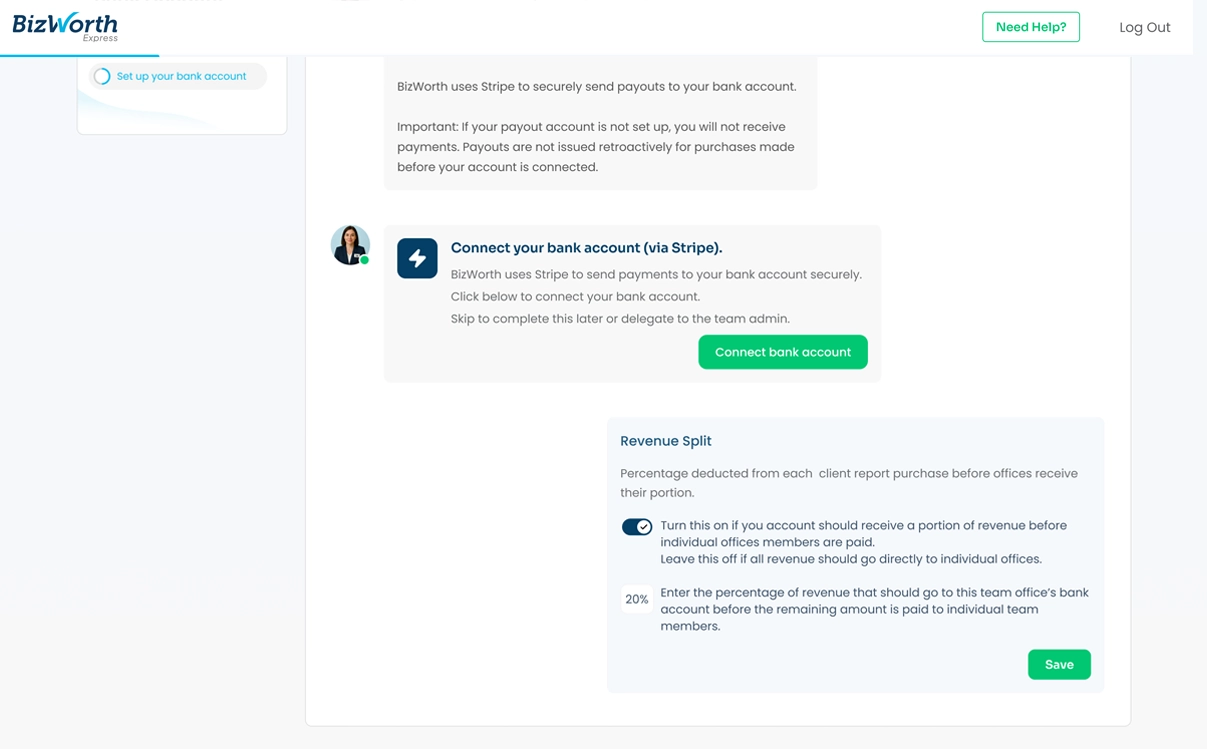
You must have an active paid subscription plan and complete payout onboarding through Stripe to be eligible to receive payouts. Payout eligibility is determined separately for each company, office, or advisor receiving a portion of the transaction. If a participant has not completed payout onboarding or does not have a valid payout account configured at the time payouts are processed, that participant is considered ineligible for payouts.
When a client purchases a valuation report, the payment is processed securely through the platform and collected by Stripe, a third-party payment processor. Funds are first held within Stripe before being distributed according to the transaction type and the organization’s payout structure.
When a report credit is used:
When a report credit is NOT used:
Once funds become available, Stripe sends payouts to connected bank accounts based on its standard payout schedule. Advisors do not need to invoice clients or manage collections manually, as the platform handles payment processing and payout distribution automatically.
For full details, refer to Additional Fees within this FAQ section.
Setting up payouts is a one-time process. You can connect your bank account in either of the following ways:
In either case, you will complete a short setup through Stripe that includes confirming your identity, business details, and bank account information. Stripe securely verifies your information before enabling payouts. Once setup is complete, your payout status will show as active and you will be ready to receive funds.
If you need to change your bank account later, go to Profile → Payouts → Personal to update your payout information.
No. You can use your existing business or personal bank account.
Stripe supports standard bank accounts, and there is no requirement to open a new account unless you prefer to separate funds for internal accounting purposes.
Yes. Payouts are powered by Stripe, a globally trusted payments platform.
All sensitive information is encrypted and handled directly by Stripe. The platform does not store your banking credentials. Stripe also performs identity verification, fraud monitoring, and regulatory compliance checks to help ensure all transactions are secure.
Fees apply only when a report is sold through the platform.
For platform-processed report sales, the following may be deducted from the sale proceeds before your payout:
When a report credit is used, the platform does not participate in revenue sharing.
Additional internal payout allocations may apply for Team or Enterprise organizations that use office-level or company-level revenue sharing structures.
Note: Advisors on Team plans may have additional revenue-sharing arrangements with their firm (e.g., corporate or office-level splits). These vary by organization, so please consult your firm for details.
See Plans & Pricing FAQs for more details.
Payout timing follows Stripe’s standard process and the platform’s payout batch schedule.
Payouts are generally issued approximately every 15 days. Actual timing may vary slightly based on Stripe processing, banking timelines, and your financial institution.
You must complete your payout setup through Stripe and have an active paid subscription plan to receive payouts.
For new accounts, the first payout may take slightly longer while Stripe completes account verification and onboarding. Once your account is fully configured and verified, payouts generally become more consistent and predictable.
You must have an active paid subscription plan and complete payout onboarding through Stripe to be eligible to receive payouts.
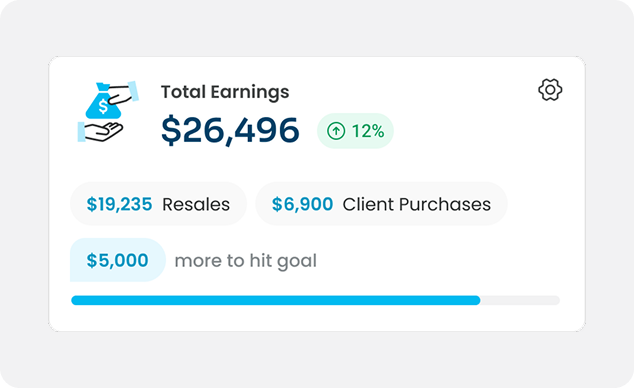
Yes. You can track your revenue activity directly within the dashboard.
Depending on your role and permissions, you may be able to view:
This gives you visibility into how revenue is being generated and distributed across your reports and transactions.
Payout eligibility is determined separately for each company, office, or advisor receiving a portion of a transaction. If a participant has not completed payout onboarding or does not have a valid payout account configured at the time payouts are processed, that participant is considered ineligible for payouts.
For security and operational reasons, certain payout reviews, holds, adjustments, or manual administrative actions may not be fully visible within the participant dashboard.
Stripe manages the actual transfer of funds to connected bank accounts based on its standard payout schedule. Final bank deposit timing may vary depending on Stripe processing and your financial institution.
The platform supports both individual and team-based payout structures.
For companies and teams, payouts can be configured at the organization level. Administrators can define how revenue is distributed across the company, offices, and individual advisors by establishing payout allocation percentages and organizational payout rules.
When a transaction occurs, Stripe / credit card processing fees and the platform transaction fee are deducted first. Depending on the transaction type, any applicable revenue share is then applied. The remaining balance is distributed according to the organization’s configured payout allocations.
When a report credit is used:
When a report credit is NOT used:
Payout eligibility is determined separately for each company, office, or advisor receiving a portion of a transaction. If one participant is ineligible for payouts because payout onboarding has not been completed or a valid payout account is not configured, this does not prevent eligible participants from receiving their payouts.
This structure allows organizations to support multiple advisors, offices, or locations while maintaining centralized administrative control over branding, reporting, transaction management, and payout distribution.
Note: Revenue-sharing structures and payout allocations are customizable and determined by each organization. Please consult your firm for specific setup and allocation details.
Yes. Payouts can be split across companies, offices, and individual advisors before funds are distributed.
Organizations can define how revenue is allocated by establishing payout percentages and organizational payout rules within the platform. Once a transaction occurs, Stripe / credit card processing fees and the platform transaction fee are deducted first. Depending on the transaction type, any applicable revenue share is then applied, and the remaining balance is distributed according to the organization’s configured payout allocations.
When a report credit is used:
When a report credit is NOT used:
Payout eligibility is determined separately for each company, office, or advisor receiving a portion of a transaction. If one participant is ineligible for payouts because payout onboarding has not been completed or a valid payout account is not configured, eligible participants may still receive their payouts.
This structure allows organizations to manage revenue sharing directly within the platform without needing to perform manual calculations or internal payment transfers.
Note: Revenue-sharing structures and payout allocations are customizable and determined by each organization. Please consult your firm for specific setup and allocation details.
You can still use the platform, but you will not be eligible to receive payouts until payout onboarding is completed and a valid payout account is configured through Stripe.
If a transaction occurs before payouts are configured:
The platform may, at its discretion, manually review or resolve certain payout situations operationally. However, retroactive payouts are not guaranteed and participants should not expect payouts for transactions processed while they were ineligible.
To help avoid payout ineligibility, it is strongly recommended to complete payout onboarding during account setup before sending client links or processing report transactions.
Yes. You can update your connected bank account at any time through your payout settings.
Stripe may require additional verification when changes are made to ensure continued security.
First-time payouts may take longer because Stripe requires identity verification, account review, and payout onboarding before funds can be released.
During initial setup, Stripe may review:
In addition, the platform may perform operational payout reviews before releasing initial payout batches.
Once your payout account has been fully configured, verified, and approved, payouts generally become more consistent and predictable based on the platform’s standard payout schedule.
The platform is designed to help advisors respond to valuation questions immediately and guide the conversation from the start.
You or your client begin by completing a structured intake that collects company and financial information. Based on that information, the platform generates a valuation summary that provides a valuation range and key insights. This allows you to begin a meaningful discussion with your client right away.
If the client wants deeper analysis, there are two ways to move to a full valuation report. You can use a report credit to generate the report directly and deliver it to your client under your terms, or the client can upgrade from the summary through a link you provided or an embedded intake form on your website. Both options result in a full valuation report delivered under your brand, with flexibility in how you choose to engage and monetize the work.
When a situation requires formal standards or additional scrutiny, the engagement can transition to a professional valuation prepared by certified appraisers.
The platform is built to support real client conversations from the first question through a potential transaction, not just produce an output.
Yes. The platform is designed to deliver a fully branded, end-to-end experience under your firm.
From the moment a client begins the intake process, the platform reflects your brand. You can send a private intake link or embed the experience directly on your website, and the process is presented through a neutral data collection portal that preserves your brand ownership.
During onboarding, your profile is established with your name, image, and brand colors. As clients move through the intake, the experience is styled around your firm and guided in a way that feels like you are leading the process. The valuation summary is delivered under your brand and highlights your identity, reinforcing your role in the engagement.
If the client moves forward, the full report experience continues that same structure. The download page reflects your branding, and the report itself is delivered under your name with your firm’s information and customizable disclaimers included. The final output is designed to be presented as part of your advisory services.
The result is a consistent, advisor-led experience from intake through final report, allowing you to stay fully in control of the client relationship while delivering valuation insights backed by generally accepted valuation methodology.
Clients are guided through a structured intake process that is clear, professional, and easy to complete.
They can provide information on their own or work alongside you, depending on how you prefer to engage. From the start, the experience reflects your brand, including your name, image, and firm identity, creating the feel that you are leading the process.
Once the intake is completed, the client receives a valuation summary presented under your brand. This introduces a valuation range and helps frame the conversation in a structured and meaningful way.
If the client chooses to move forward, they can upgrade to a full valuation report or continue working with you to interpret the results. The full report experience continues under your brand, reinforcing your role throughout the engagement.
The entire workflow is designed to feel like a natural extension of your advisory process, allowing you to guide the conversation while delivering valuation insights backed by generally accepted valuation methodology.
Yes. Advisors can either send a valuation link directly to a client or embed the intake form on their website.
Sending a link allows you to introduce the valuation process within your existing workflow, while embedding turns your website into a lead generation tool where visitors can begin the process on their own. In both cases, the entire experience is delivered under your brand, so clients engage with the process as an extension of your firm.
When a client starts a valuation, the activity is captured in your dashboard and you receive an email notification so you can follow up and guide the conversation. This ensures you stay informed and in control from the very beginning.
Both approaches are designed to help you engage clients earlier and manage valuation conversations as part of your advisory process while maintaining full ownership of the client experience.
The platform uses a guided intake process to collect company and financial information in a structured format.
You can capture up to three years of historical financials along with a current partial year, allowing the valuation to reflect both past performance and recent trends. To reduce manual work, the platform supports QuickBooks integration and tax return uploads, which can automatically populate key financial fields.
You can choose how the work is completed: enter the information yourself, have your client complete it, or collaborate together. If additional support is needed, you can schedule time with a certified appraiser directly through the platform to assist with data collection. When interacting with your client, the appraiser will introduce themselves as a certified appraiser and will not reference the platform, ensuring a seamless white-labeled experience.
During the process, you also have control over how detailed the financial adjustments are. You can select a streamlined approach to move efficiently or a more detailed option to refine the financials and improve accuracy.
The platform is designed to give you flexibility in how much time you invest while still producing a structured and credible valuation outcome.
Yes. Financial data can be imported from QuickBooks or uploaded through tax returns.
The platform extracts relevant information and maps it into the financial intake, reducing manual entry and helping advisors move through the valuation process efficiently. Most key financial accounts map seamlessly; however, accounting practices and account structures can vary by company, bookkeeper, and CPA. When an exact corresponding account is not available, the platform maps the information to the most appropriate available category.
Advisors should carefully review all imported financial data and account mappings for accuracy and make any necessary adjustments before proceeding with the valuation.
Financial adjustments allow you to reflect how the business actually operates, rather than relying solely on reported financials.
The platform guides you through this process using a structured, step-by-step flow. You will only be asked questions that apply to the specific business, which keeps the experience focused and efficient.
You can choose between a quick adjustment path for common items or a more detailed approach for deeper analysis. This includes areas such as owner compensation, one-time expenses, and other factors that may impact true earnings.
As you complete adjustments, the platform updates your financials in real time and allows you to review both historic and adjusted results before continuing. This gives you confidence that the valuation reflects the true operating performance of the business.
Guided support is available throughout to help you understand how each adjustment affects the outcome.
The platform is built on the same foundational valuation framework and data sources used in most NACVA certified appraisal practices.
The reports are designed to support advisory discussions by providing structured analysis and a supported valuation range. They are well suited for planning, early-stage conversations, and internal decision-making.
When a situation requires formal standards, legal support, or deeper analysis, the engagement can seamlessly transition to a professional valuation prepared by NACVA certified appraisers.
This enables advisors to use the platform with confidence in client conversations, while maintaining a clear path to a more rigorous, professionally prepared valuation when needed.
The full valuation report is a detailed, client-ready document delivered under your brand and designed to support real advisory conversations.
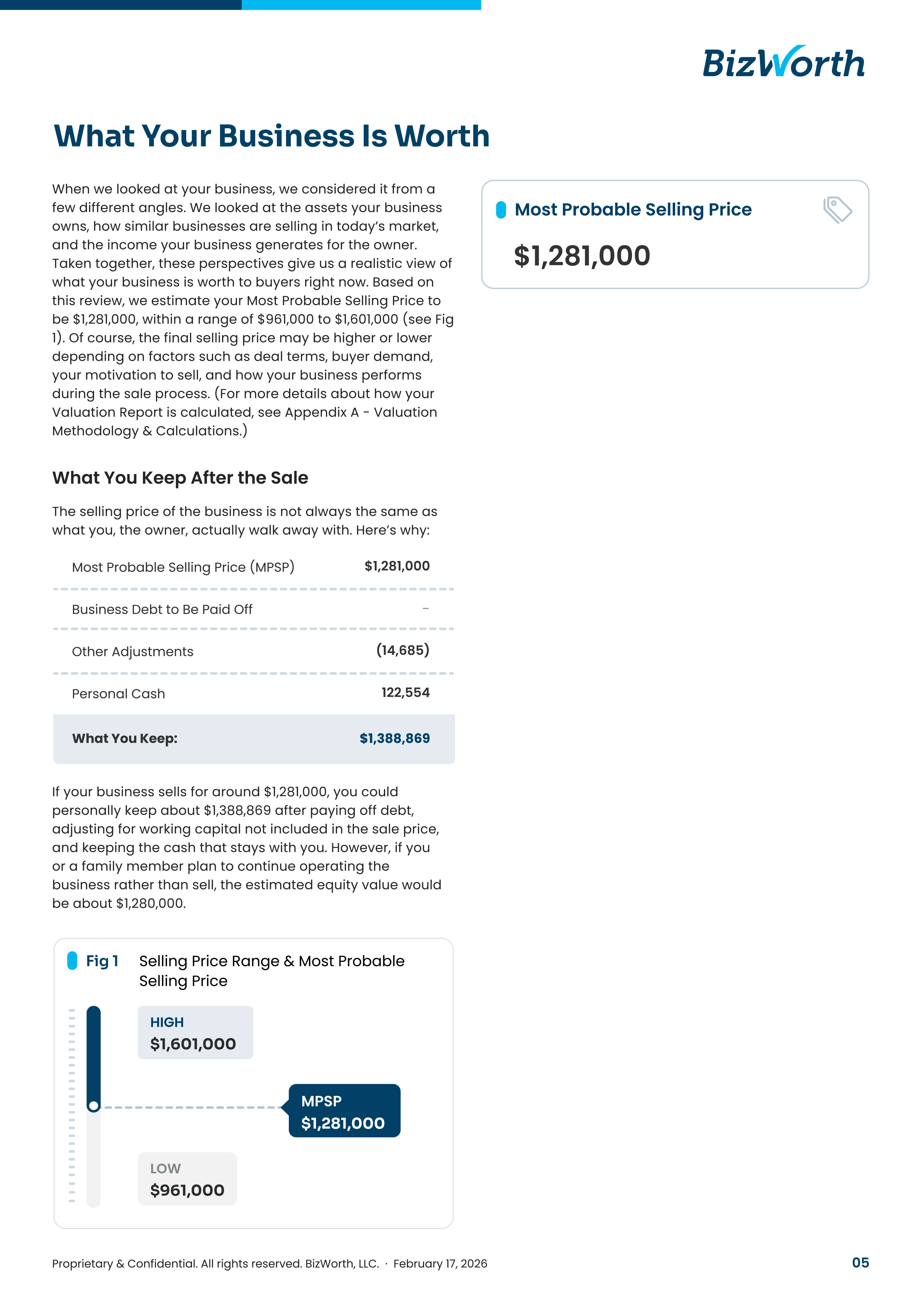
At a high level, the report provides a clear estimate of value, including a Most Probable Selling Price, along with a supporting range based on how buyers and lenders evaluate similar businesses. It explains not just what the business is worth, but how that value is determined and what factors influence it.
The report walks through the key drivers of value in plain language, including how earnings are adjusted to reflect true operating performance, how comparable businesses are priced in the market, and how buyers assess risk and structure transactions. It also provides insight into financing considerations, including how lenders evaluate affordability and deal structure.
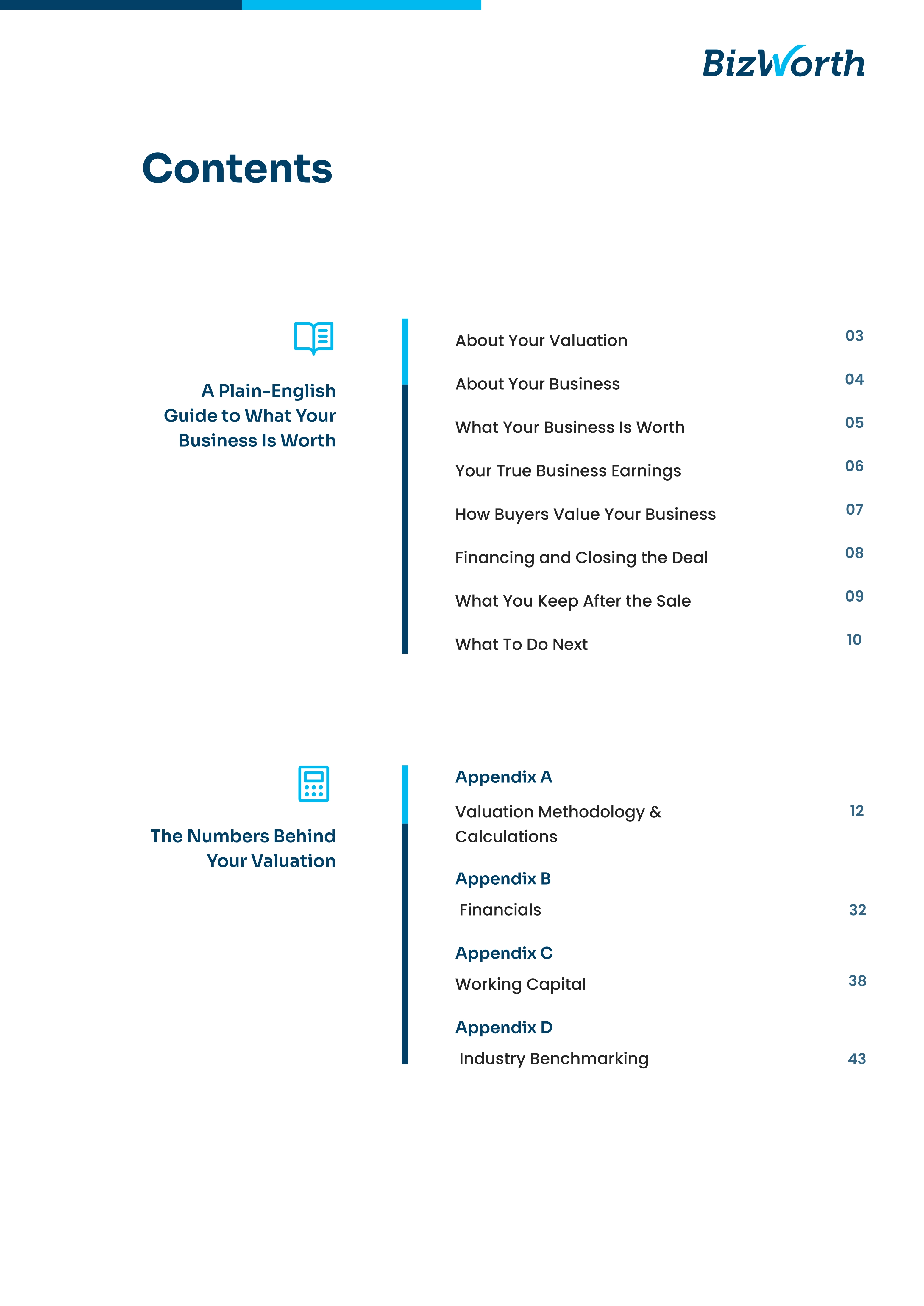
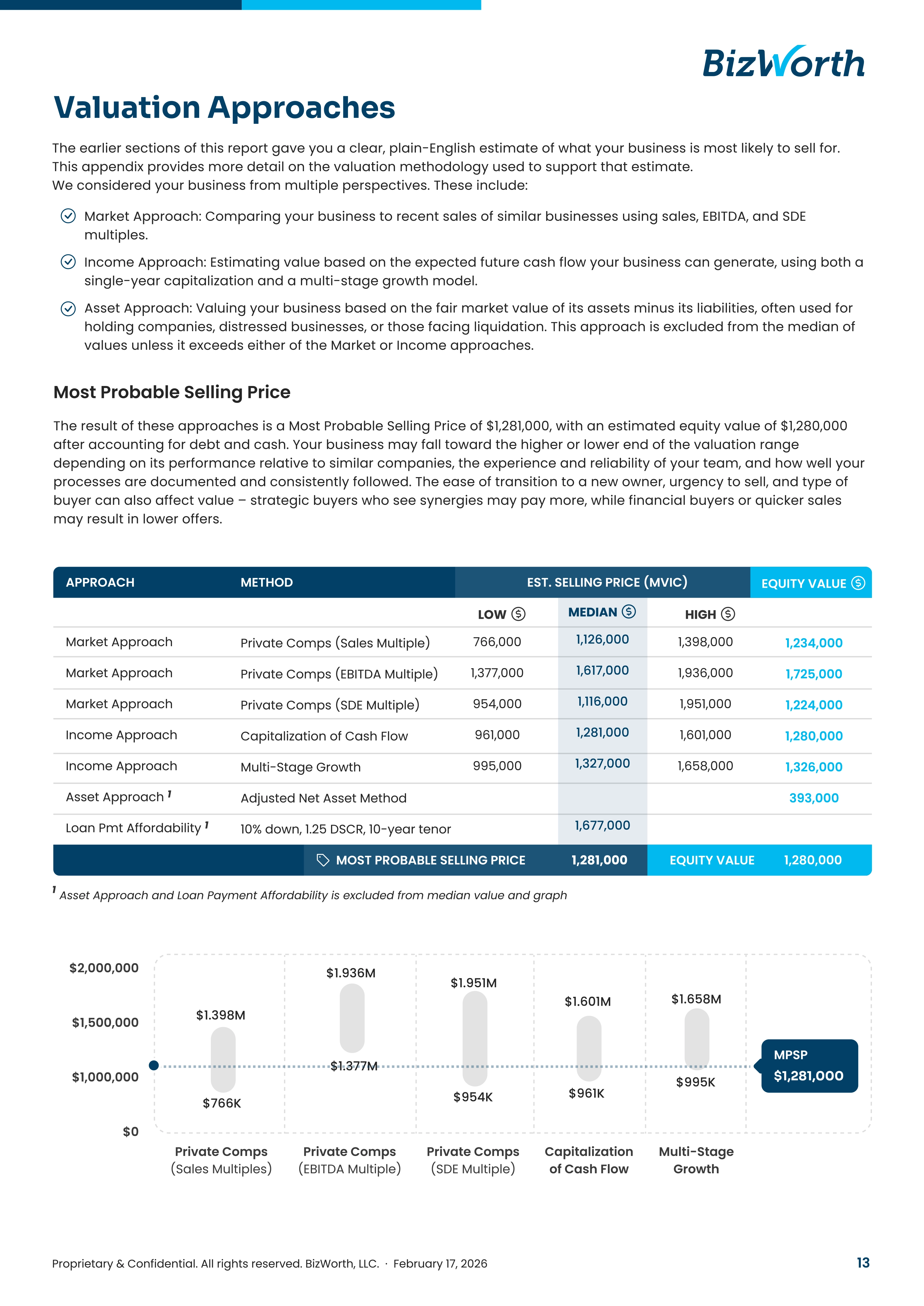
In addition to the narrative sections, the report includes a deeper level of analysis in the appendix. This includes both historic and adjusted financials, normalization adjustments, working capital considerations, and industry benchmarking. It also outlines the valuation methodologies used, including market, income, and asset-based approaches, along with the calculations that support the final value estimate.
The result is a structured, professional report that helps advisors move beyond a high-level estimate and guide clients through how value is measured and what steps can be taken next.
This report is designed for planning, advisory discussions, and early-stage decision-making. When a situation involves complex or unique factors, requires advanced financial adjustments, or calls for formal standards, legal support, or a higher level of scrutiny, the engagement can be elevated to a professional valuation prepared by NACVA certified appraisers.
Yes. NACVA certified appraisers are available when additional guidance is helpful.
You can schedule time for support with entering data into the platform, financial adjustments, or interpreting valuation results. This helps you confidently review and discuss the valuation with your client, even in more complex situations.
Clients may participate in scheduled calls during the intake process when assistance is needed to gather or clarify information before the valuation report is generated. Once a valuation report has been generated, consultations regarding the valuation results are available only to the subscribing advisor. Our appraisers do not discuss completed valuation results directly with an advisor’s client.
When participating in an advisor or client call, our appraisers introduce themselves as certified appraisers and do not reference BizWorth Express, helping maintain the advisor’s white-labeled experience.
If a client believes a formal professional valuation may be needed, they can indicate this within the platform. You will be notified and can determine the appropriate next step. If you choose to proceed, you may collect payment from your client at your resale price and place the order through the platform. A NACVA certified appraisal team can then support the professional valuation engagement, with the option to maintain a fully white-labeled experience.
The Summary Report provides a complimentary estimated range of value to give you an initial understanding of what the business may be worth. It also includes a preview of the Full Report, such as the table of contents and an overview of the analysis and insights included. Other than the estimated value range, the preview does not include additional company-specific analysis or results.
For some business owners, a free estimated value range may be all that is needed. For others, understanding the factors behind the value—and how the business may be viewed by buyers and lenders—can provide much greater insight.
The Full Report provides a comprehensive, company-specific analysis. It explains how the valuation was developed and includes analysis of the company’s financial performance, earnings adjustments, buyer considerations, risk factors, industry benchmarking, financing concepts, loan eligibility, valuation methodologies, and supporting calculations. Rather than simply providing an estimated range of value, the Full Report helps you understand the factors influencing the business’s value and provides deeper insight into its financial and valuation profile.
The Summary Report is designed to help you evaluate whether the information entered accurately reflects the business before generating the Full Report.
If the estimated value range doesn't seem reasonable, this is the ideal time to review your inputs. You can return to any section of the intake process to review or edit financial information, earnings adjustments, owner compensation, unusual or one-time expenses, balance sheet items, or other assumptions that may affect value. There is no limit to the number of revisions you can make before generating the Full Report, and reviewing or updating the Summary Report does not use a report credit.
Because the Summary Report can be regenerated as needed without using a report credit, many users choose to refine their inputs until the estimated value range reasonably reflects the economics of the business. Taking a few extra minutes to review the information can lead to a more accurate and meaningful Full Report.
Once you are comfortable with the information and estimated value range, you can generate the Full Report. Depending on how the report is being purchased, generating a Full Report will either use one report credit or require payment of the designated report price. If you later make changes and want an updated Full Report, a new report must be generated and will require another report credit or purchase, as applicable. For that reason, we recommend carefully reviewing your inputs and Summary Report before generating the Full Report.
The Full Report is a professionally designed business valuation report built on a valuation framework developed by NACVA valuation professionals using methodologies commonly applied in professional appraisal practice. Each Full Report is generated through the platform using the information provided during the valuation process, together with premium market, industry, economic, and transaction data, to develop a well-supported estimate of value. A NACVA Certified Appraiser does not independently prepare, review, or approve each Full Report.
For many business owners and advisors, the Full Report provides the insight needed for planning, exit preparation, succession planning, internal decision-making, and preliminary pricing discussions. It explains not only what the business may be worth, but also the financial analysis, valuation methodologies, and key factors that influence value.
However, the Full Report is not a certified business valuation prepared by a NACVA Certified Appraiser. A certified valuation includes direct involvement from an experienced valuation professional who performs owner interviews, conducts a detailed review of financial records, develops customized financial adjustments, independently selects comparable companies and transactions, and applies professional judgment throughout the engagement. This additional analysis may identify facts and circumstances that cannot be fully evaluated through a platform-generated valuation.
If your situation requires a certified business valuation—for example, for litigation, SBA lending, divorce, estate and gift tax planning, shareholder disputes, or other legal or financial purposes—you or your advisor can request a customized proposal directly through the platform.
If you've already purchased a Full Report, you may also qualify for a discounted upgrade to a professionally prepared certified business valuation. This allows you to build on the information already collected while receiving the additional analysis, documentation, and professional judgment provided by a NACVA Certified Appraiser.
Yes. The Full Report was intentionally written for readers without a valuation or accounting background. The opening sections explain valuation concepts in plain English while avoiding unnecessary technical language. Instead of presenting calculations alone, the report explains what the numbers mean, why they matter, and how they relate to real-world business transactions.
Business owners gain a clearer understanding of their company's value, while advisors have sufficient supporting information to answer questions and guide meaningful discussions.
The Full Report is designed to answer much more than the question, 'What is my business worth?' It explains what the business may be worth today, how buyers typically determine price, how financing influences transaction values, and the operational and financial factors that contribute to higher or lower business value.
It also helps identify strengths, potential risks, and opportunities for improvement, making the report valuable for exit planning, succession planning, growth initiatives, acquisitions, annual planning, and other important business decisions.
Not necessarily. The valuation reflects an estimate of fair market value—the price at which a knowledgeable buyer and seller would typically agree to complete a transaction under normal market conditions.
Some buyers may be willing to pay more because the acquisition creates unique strategic benefits, such as expanding into a new market, eliminating a competitor, adding key employees, or creating operational synergies. These strategic or investment values can exceed fair market value, sometimes significantly. The report provides an objective baseline that helps evaluate offers and negotiate from an informed position.
The valuation uses recognized valuation methodologies commonly applied in professional appraisal practice. Depending on the characteristics of the business, the analysis may consider market, income, and asset approaches together with historical operating performance, normalized earnings, financial adjustments, and current market data.
The valuation combines information entered during the intake process with premium economic, industry, and transaction databases to develop a supported estimate of value. The appendix provides additional detail regarding the calculations and methodologies used.
Yes. One of the primary goals of the report is to explain valuation from a buyer's perspective. It discusses how buyers evaluate earnings, business risk, growth opportunities, financing capacity, and expected return on investment. It also introduces concepts such as valuation multiples, debt service, and transaction structure so readers better understand why businesses are priced the way they are.
Understanding these concepts often helps business owners make better operational decisions while allowing advisors to have more productive valuation conversations.
The Full Report provides a comprehensive, company-specific financial and valuation analysis that goes well beyond the estimated value range provided in the Summary Report.
The report includes normalized financial statements, financial adjustments, Adjusted EBITDA and Seller’s Discretionary Earnings (SDE), market multiples, valuation calculations, industry benchmarking, net working capital analysis, financing and loan eligibility analysis, and supporting schedules. It also includes the Most Probable Selling Price (MPSP) and explains the financial, market, and business factors influencing the estimated value.
The Full Report combines information provided during the valuation process with premium market, industry, economic, and private transaction data. Detailed schedules and appendices provide additional transparency into the valuation methodologies, calculations, financial adjustments, transaction data, and benchmarking used throughout the analysis.
The Full Report is built on a valuation framework developed by NACVA valuation professionals using methodologies commonly applied in professional appraisal practice. However, it is not a certified business valuation prepared by a NACVA Certified Appraiser. Certified valuations include direct appraiser involvement, additional due diligence, customized analysis, and professional judgment based on the unique facts and circumstances of the business. When a certified valuation is appropriate, a customized proposal can be requested through the platform, and businesses upgrading from a Full Report may qualify for discounted pricing. Certified valuation engagements may also be white-labeled under the advisor’s brand, allowing the advisor to maintain a consistent client experience throughout the engagement.
The report is appropriate for planning, preliminary pricing discussions, exit preparation, succession planning, annual business reviews, and helping business owners better understand value. It is intended to support informed decision-making and identify situations where additional analysis may be beneficial.
Certain circumstances require a professionally prepared certified business valuation, including litigation, divorce, shareholder disputes, estate and gift tax matters, SBA lending, financial reporting, and other situations requiring compliance with professional valuation standards. A certified valuation includes direct involvement from a NACVA Certified Appraiser who performs owner interviews, evaluates unique facts and circumstances, develops customized financial adjustments, independently selects comparable companies and transactions, and applies professional judgment throughout the engagement.
The Summary Report is designed to provide an initial estimated range of value and a preview of the analysis and insights available in the Full Report. It also gives you an opportunity to review the information entered during the intake process before generating the Full Report. If the estimated value range does not appear reasonable, this is the ideal time to review and refine the financial information, adjustments, or other inputs to better reflect the economics of the business. Reviewing or updating the Summary Report does not use a report credit.
The Full Report is intended to support more informed planning, valuation discussions, and business decisions. In addition to the estimated value, it provides company-specific financial analysis, valuation methodologies, market and industry data, benchmarking, financing and loan eligibility analysis, and other insights that help explain how the estimated value was developed and the factors influencing it.
The Full Report can be useful when evaluating a potential sale, preparing for an exit, supporting client discussions, planning for growth or succession, evaluating financing considerations, or simply developing a deeper understanding of the business and its value.
The Full Report is not a certified business valuation prepared by a NACVA Certified Appraiser. For situations requiring additional due diligence, customized analysis, professional judgment, or compliance with professional valuation standards, a professionally prepared certified business valuation may be appropriate. Certified valuations are performed by NACVA Certified Appraisers and may also be white-labeled under the advisor’s brand to maintain a consistent client experience.
Advisors receive full access from day one: